Saturday, December 20, 2008

Shout Out to Shannon


Here's a shout out our fellow native Northwesterner David Shannon (though he now calls SoCal home). His Too Many Toys, was named a Top Ten Children's Book of the Year by Time Magazine. Mr. Shannon was recently here in Spokane, for Whitworth University's annual Writing Rally. He never fails to entertain. Congratulations!

--Under the Covers

Friday, December 19, 2008

Writing Place/Creative Space


I've been in basically two places the last two days, out shoveling a record snowfall from my driveway or in my study writing. I'm not complaining about either. I love a snow day! The whole town practically closed down and it feels like a vacation. Except that I work at home in my study, so no excuse to skip writing.

At HipWriterMama Vivian posted a photo of her writing space yesterday, and links to several other writers who also posted theirs. The voyeur in me loved seeing them. The show off in me wanted to post my own. So here it is. All that white you see out the window is snow. Don't miss the coffee cup. I can't write without my double mocha.

Having my own space with my own clutter all around me is important to my writing process. My study is a sun porch off my bedroom, so my kids have to go through two doors to get to me. My husband makes me clean up my piles of books and papers in the rest of the house, but in my study I can pile all I want to. It's
cold in winter, especially now when the temperature is falling below zero, so I have a little space heater under my desk, and I put heated rice bags in my lap. They are fabulous, if you need a way to keep warm. Also good for those pains in the neck and shoulders. What's the best thing about your writing space?

Thursday, December 18, 2008

Cave Church Frescoes


An interior image of a Cappadocian cave church, which I wrote about in the Dec 18th entry below...

Cappadocia Cave Churches


While researching a current novel I spent this fall in Turkey, following in the footsteps of St. Paul. I took this photo in one of the cave churches in Cappadocia. I couldn’t believe how vivid the colors of the frescoes remained after so many centuries. Something about the utter simplicity of these caves, including the caches of mineral pigments I saw in the soil on the trails leading to these places---left me awestruck in a way in which no European cathedral has. There is something so much more raw, unadorned and unself-conscious about these sacred spaces. Remembering them helps brings me closer to the spirit of Christmas during this busy time of year.

---Meghan Nuttall Sayres

Tuesday, December 16, 2008

Why an MFA in Creative Writing for Children and Young Adults in a Tight Economy?

In 1987 I earned an MFA in Creative Writing from the University of Alaska Fairbanks. Twenty years later I have the great gift of teaching in a program tailored just for children's writers. Claire Rudolf Murphy

The following two articles were first published in the Western Washington SCBWI newsletter in August 2008. Since then the economy has nosedived and like the rest of America, publishers are facing hard times.

Why Hamline?
By Hannah Trierweiler, January 2009 Hamline MFA graduate

True confession: I began the Master of Fine Arts (MFA) program in writing for children at Hamline University with some reluctance. For months prior to sending in that deposit check, I debated whether or not an MFA would be worth the time — several writers told me I’d learn just as much from working on my own — or the money — not a small sum, considering that if and when I ever get published, my advance will likely be less than one semester’s tuition. But ultimately, I leapt, and now, a year later and well into my third semester, I’m absolutely thrilled that I did.

Hamline is a new program. The first class will graduate in January 2009. But from the beginning, it has operated without the roadblocks you’d expect from a program in its infancy. In part, this is because core faculty members, including Jane Resh Thomas, Phyllis Root, Ron Koertge, and Liza Ketchum, are veteran instructors from the Vermont College MFA program. But the Hamline program also owes much of its success to Dean Mary Rockcastle, who is a writer herself and deeply invested in the program. Mary attends every lecture during residencies, sits with students at meals, and is unfailingly open to discussing questions and concerns. I’ve never met another administrator like her, and I know she’s determined to make the program the best it can be.

Hamline functions much like other low-residency MFA programs. There are two eleven-day residencies per year, one in January and one in July, each followed by a semester of working one-on-one with a faculty advisor. In addition to those listed above, the faculty includes Jacqueline Briggs-Martin, Kate DiCamillo, Kelly Easton, Lisa Jahn-Clough, Ron Koertge, Alexandria LaFaye, Mary Logue, Alison McGhee, Marsha Qualey, Claire Rudolf Murphy, Gary D. Schmidt, and Marsha Wilson Chall.

This group is overwhelmingly open and generous. Faculty members make a point of getting to know all of the students—not just those they advise or who attended their own workshops during residencies. While each faculty member tends to specialize in one or two genres, most are open to working on projects outside their direct area of expertise, and there’s a good balance between those focusing on fiction and nonfiction for picture-book, middle-grade, and young-adult readers.

Thus far I’ve worked with Jane, Gary, and Phyllis. Each has made me feel as if I’ve won a writer’s lottery. Every packet of work that I’ve sent in has been returned with a detailed cover letter and line edits, and I’ve heard similar reports from my classmates.

Going to the residencies is a bit like going to summer camp. It is my busiest 22 days out of the year, as well as the most inspirational. Workshops have made me rethink and re-imagine my novel, making it much stronger in the process. Lectures about the challenges of the writing life have made me cry (in a good way). I’ve gotten a sneak peek of works-in-progress from some of my favorite authors. And I’ve met some of my heroes, including visiting writers M.T. Anderson, Lois Lowry, and Emily Jenkins (E. Lockhart). And I can’t forget the late-night, wine-and-cheese bonding sessions I’ve had with fellow classmates.

You wouldn’t think I’d be thrilled to go to Minneapolis in the dead of winter or during the hot, muggy summers. But the Minneapolis/St. Paul area offers a wealth of resources for children’s writers, including the Children’s Literature Network and the Kerlan collection at the University of Minnesota, which has archived original manuscripts and editorial correspondence from hundreds of children’s authors. There are also several outstanding bookstores a stone’s throw from Hamline. While I live in New York City, the heart of the publishing world, I’ve loved having the opportunity to become involved in another community that cares so much about children’s literature. And I’m excited to see how Hamline—and my fellow classmates—will be a part of enriching that community in the future.

Why Teach in a MFA Creative Writing Program?
Faculty member Claire Rudolf Murphy
I love being part of Hamline’s MFA program. I believe low-residency creative writing programs have taken off because manuscripts today need to be almost publication ready before a contract is offered. With sales driving the bottom line, editors must devote more time to marketing and less to editing. Skills developed through students’ creative and critical writing in the program can lead not only to publication, but to editorial, teaching and book review opportunities. Since an MFA is a terminal graduate degree, it gives a writer the needed credentials to teach at the collegiate and graduate level.

At my first Hamline residency in January 2008, I told the students I had longed for a program like this while earning my MFA twenty years ago. Back then I wanted to jumpstart my writing career, but since none of the faculty wrote children’s books I was instructed not to include YA characters in my stories. I studied the craft of fiction and great literature, but had to learn about children’s books on my own.

At Hamline, students study all genres in children’s literature and are encouraged in write in every genre during their five-semester program. Mentored by a different writer each semester, they learn to how to work with varied editorial styles, an important skill for one’s career. Students send a packet of 20-80 pages four times a semester. The instructor responds with written comments and an editorial letter and occasional emails and phone calls, much like the editorial process with an editor. Mentoring writers has challenged me to articulate what I know about my craft and search out what I don’t. I recommend exemplary literature and craft books in their genre. This term my students all began working on shorter nonfiction projects, but some manuscripts evolved into historical fiction picture books, contemporary novels and longer nonfiction book proposals, as they explored the best way to tell their story. In every packet, I encouraged them to reflect about their own writing process and to identify their passion for each project, the enthusiasm needed to carry them through the rigorous revision process.
I have given talks on research, character in nonfiction and for this upcoming January 2009 residency, I will speak on plot in nonfiction and learned a great deal as I pore over the structure of my favorite nonfiction books.  One of my students this term is publishing her second book and another has an editor interested in her nonfiction project. My students inspire me to work harder to respond to their work and improve my own craft. Their work has renewed my hope and re-ignited my own passion for writing. 

Faculty and students hail from all over the country. Contact me any time with questions about the program: clairerudolfmurphy@gmail.com.


Monday, December 1, 2008

SCBWI NonFiction Grant

James Cross Giblin Award

The phone rang as I tossed sautéed vegetables with pasta. My husband said, “It’s for you. It’s Sue Burgess.”

I thought of reminding him I never take phone calls when I’m cooking dinner. But Sue Burgess rang a bell. The name piqued my curiosity.

Sue told me she was calling to announce I had won this year's Society of Children’s Book Writers and Illustrators Nonfiction Work-in-Progress Award.

“You’re kidding,” I screamed. So much for original phrasing. She said she wasn’t.

“I can’t believe it,” I screamed. “I’m so excited.” My family stood in the kitchen staring at me. “Thank you. Thank you.” I kept screaming. Sue probably began to wonder if the $1500 shouldn’t go to someone with a few more words in their vocabulary. But she was very kind and said she loved making calls like this.

I don’t know if the pasta dish was finished, or if anybody ate it. I told my family the good news, and then phone all my writing buddies to tell them.

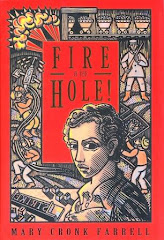
The grant money will fund research for a biography on Fannie Sellins, an early 20th Century labor activist. Sellins had a passionate belief that workers deserved better lives and the charisma to convince them to believe it too. She knew coal miners would not give up their paycheck and walk a picket because their children would starve, so she found food and clothing for their families.

A compelling speaker, she stirred wild applause, often evoked tears and inspired hope. Hats filled with money for the union cause wherever she spoke. Ordered by a West Virginia judge to stop speaking in public, she refused. And went to jail.

She was so successful unionizing miners in Western Pennsylvania that coal company operators threatened her life. She refused to be bullied into leaving and was shot to death on the picket line in 1919.

I am passionate about telling this woman’s story and it means so much to me that the awards committee believes it’s worth publishing. The grant is endowed by SCBWI Board member James Giblin. The noted author and editor named the Anna Cross Giblin award after his mother who enthusiastically supported his own non-fiction writing for young people.

“I can’t imagine anything that would have given her greater satisfaction—or be more appropriate tribute to her memory….” Giblin says, than indirectly helping encourage other nonfiction writers.

~~Mary Cronk Farrell

Wednesday, November 5, 2008

A Multifaith Stroll


Days ago I set out to find a Christian Orthodox church with a living breathing community. I recently found this in a neighborhood along the Golden Horn called Fener, which refers to light. It is the home of the seat of Eastern Christian Orthodox Church and has been here in Istanbul since Byzantine times. The Patriarchate of the Greek Orthodox church has been in this particular neighborhood since about 1601. I read that the present church of St George was built in 1720. There are relics inside of at least three saints and the throne supposedly dates to Byzantine times. What stuck me about this sanctuary is its modesty. I happened upon it on a Sunday when a Mass was underway. The chanting or hymns sung before the priest entered the church sounded like opera mixed with the type of hum one might hear from Buddhist monks. Tourists flooded in and out, snapping pictures and taking video recordings.

Walking the streets in Fener that surrounded this church revealed a multifaith community. Women wearing head scarves and women dressed in black chadors—the covering more often seen in Iran—went about their errands. In this part of the city the homes maintain an old-style charm, colorful with bay windows and situated on steep cobble stone streets. Apparently, UNESCO is investing in restoring this area and another nearby neighborhood of Balak. To me, it had the atmosphere of an inner-city village of decades past. Quiet and few cars. There are other churches here as well. The one whose name caught my interest was St. Mary of the Mongols, if only because I’ve never heard the word saint associated with the word Mongol. St Mary’s story is a fascinating tale of a Christian who was sent to wed a Mongol khan in Persia. She converted many to Christianity and after the death and assassination of her two subsequent husbands, she went back to Istanbul and started a convent. As an aside, after reading Jack Weatherford’s book Genghis Khan, little would surprise me further about Mongols. Weatherford reported that Genghis held interfaith debates, they were like festivals and lasted days. He allowed freedom of religion across his vast empire.

Further up the Golden Horn I visited the neighborhood of Eyup and its mosque, which after Mecca and Jerusalem it is likely one of the most sacred places of pilgrimage in the Islamic world. The burial place of Eyup (Job) Ensari, the friend and standard-bearer of the Prophet Muhammad, may peace be upon them. I hadn’t known this about the mosque the afternoon I covered my hair with a scarf and entered, but it became evident that this holy site was of special significance. People flocked here on a Sunday, a day other than Friday. The courtyard had a celebratory air. People picnicked, fed pigeons and let their children run free. Inside the mosque itself, I sensed a cheerful feeling, more so than any other mosque I’ve visited. A large tree, perhaps hundreds of years old, bended toward the earth in the middle of the courtyard. Men and women lined up to touch the grill overlooking the site where I believe Eyup Ensari was buried. Blue and green tiles covered one wall of the inner courtyard. It is a mosque I wish to visit again. People seemed very welcoming of me and my American friend.

It is interesting that in Istanbul two of the most important sites belonging to both Christianity and the Muslim world have co-existed for centuries in neighborhoods that are nearly side by side.

One of my favorite moments in Istanbul was my second visit to the Kucuk Ayasofya mosque by the artist atelier that I mentioned in an earlier blog. I left my shoes at the door and walked inside to find an empty carpeted room. The quiet made my ears ring and it was then that I realized how much noise I had adapted to in the previous weeks. Several chandlers hung from the high domed ceiling, which was painted in delft blue hues on white. Sunshine streamed in through windows high up on the wall. It seemed much later before my hearing readjusted and I heard the random gleeful cry of a child outside and then the hum of traffic and the horrendous rush and roar of the tram that sprinted by. Its unnatural and frightening sound seemed a crime against this peaceful sanctuary.

My eyes fell on prayer beads that lay on a platform beside me, awaiting whoever may come to use them. Soon, two people walked in, a man and a woman without her hair covered. They sat on the platform besaide me and I soon heard the clicking of the glass beads as the man moved between his fingers in prayer.

Sometime later, a woman wearing a deep red scarf wandered in and sat on the platform that the man and woman vacated. Her soft murmurs, small utterances drifting my way. When she left, I found myself reciting the words, Hail Mary full of grace....

Hail Mary’s in a mosque. In a mosque that was once a church. St. Mary of the Mongols. The distinctions begin to blur. Blur so sweetly, peacefully.